Life Observations from a Color Run

I don’t do this very often—share experiences from my life in this blog.  The reason is that I want what I write here to be “God” focused, not “me” focused.  Some things stood out in my mind about an experience this morning, though, and I thought I’d write them out and share them here.

I have never before today participated in an organized run (or primarily “walk” in my case).  However, we were told about a 5k “color run”, and it sounded fun, so my daughter signed us up— “us” being her, me, and my 5-year-old granddaughter. 

Disclaimer:  Should I ever do it again; I hope to remember to keep my mouth closed when walking through clouds of colored chalk!

By the end of the “run”, my daughter had a lot more colors on her face and clothes than I did; however, all three of us were quite colorful!  I couldn’t help but think while looking at the colors on her face about our lives being canvases, our journey and experiences along the path throwing colors, designing our characters and defining us by our responses.

As I considered some of the faces I saw today, I wondered about those whose countenances, by the line of their lips or the set of their jaws, seemed to portray anger.  I am quite sensitive to anger because that is something I became all too familiar with in the past.  I also saw expressions of joy and laughter, and blockades of defensiveness.  I tend to (attempt to, anyway) read people’s expressions so that I will know how to gage my responses to them.

On the other hand, my desire is to let the hope I have in Jesus and the promises found in God’s Word paint the canvas of my face with joy and the glory found in beholding Him.  The apostle Paul encouraged the Corinthian church, “But we all, with unveiled face, beholding as in a mirror the glory of the Lord, are being transformed into the same image from glory to glory, just as by the Spirit of the Lord” (2 Corinthians 3:18).

Everyone is born with unique personal and physical characteristics but the focus of our lives will add the dimension and shading that most accurately defines us— “And do not be conformed to this world, but be transformed by the renewing of your mind, that you may prove what is that good and acceptable and perfect will of God” (Romans 12:2).

I’m pretty sure that I was the oldest person in the “color run” (I live with my daughter and granddaughter on a military base so that is easy to figure out).  Most people actually ran the race, though I mostly walked (and was one of the last to cross the finish line).  But I did cross the finish line!  It wasn’t difficult because I am used to walking this distance around the base.

The writer of Hebrews compares living our lives as Christians to running a race: “…let us lay aside every weight, and the sin which so easily ensnares us, and let us run with endurance the race that is set before us, looking unto Jesus, the author and finisher of our faith, who for the joy that was set before Him endured the cross, despising the shame, and has sat down at the right hand of the throne of God” (Hebrews 12:1, 2).

I wonder if we build spiritual strength through the spiritual training we get each day—if we are bolstering our endurance for the course ahead by “looking unto Jesus” through Bible study, prayer, and Christ-centered fellowship with other believers?  I’m quite sure the answer is a resounding “Yes!”

The prophet Isaiah wrote, “But now, O Lord, You are our Father; we are the clay, and You our potter; and all we are the work of Your hand” (Isaiah 64:8).  And Paul wrote in his letter to the church at Rome, “…Does not the potter have power over the clay, from the same lump to make one vessel for honor and another for dishonor?” (Romans 9:21).

God is an artisan, the master Designer of our lives—it is He who chose our DNA and formed us in our mother’s womb.  Our life experiences often guide us and form us in even more unique ways, putting pressure on areas of lives, producing new dimensions or grriaeater usefulness.  Do you think it is possible to put our hands into the Master’s hands as he is shaping us through the sunlight and the shadows, over smooth pathways or rocky crags, across tranquil waters or down the turbulent rapids of life? …adding our touch to the vessel of our lives by the responses we make to the Potter’s design?  Perhaps our responses to the Creator determine whether we will be vessels for honor or dishonor…

And this is my desire—to bring honor to name of my Lord, Jesus Christ.

Posted in Uncategorized | Tagged , , , , , , , , | Leave a comment

“High Places”

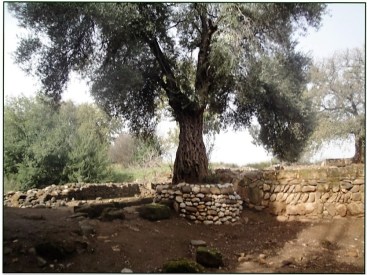
We visited Tel Hazor on day three of our trip to Israel and I hoped to write about the experience before Easter because of the Canaanite gods that were worshipped there.  Our guide referred to the female goddess, Ashtoreth—a god of fertility—sharing with us that Ashtoreth is a root of the word Ishtar (an ancient Canaanite god), which is a root of the word Easter.  If you do a search on the origins of Easter, you will also see mention of “Eastre” or “Eostre”, a Saxon goddess of fertility.

I figured that I had the basis of a great blog to post right before Easter, or Resurrection Sunday, if you will.  But with a lot of study, it didn’t come out quite the way I thought it would. 

But  firstlet me tell you a bit about Hazor…

The Holy Spirit instructed the children of Israel through Moses, “When the Lord your God brings you into the land which you go to possess, and has cast out many nations before you…seven nations greater and mightier than you, and when the Lord your God delivers them over to you, you shall conquer them and utterly destroy them.  You shall make no covenant with them nor show mercy to them…. But thus you shall deal with them:  you shall destroy their altars, and break down their sacred pillars, and cut down their wooden images, and burn their carved images with fire.” (Deuteronomy 7:1-2, 5)

“For you are a holy people to the Lord your God; the Lord your God has chosen you to be a people for Himself, a special treasure above all the people on the face of the earth.” (Deuteronomy 7:6)

God commissioned Joshua to lead the Israelites across the Jordan River into the land of Canaan with these words, “Now therefore, arise, go over this Jordan, you and all this people, to the land which I am giving to them—the children of Israel.  Every place that the sole of your foot will tread upon I have given you, as I said to Moses…. No man shall be able to stand before you all the days of your life; as I was with Moses, so I will be with you.  Be strong and of good courage, for to this people you shall divide as an inheritance the land which I swore to their fathers to give them.” (Joshua 1:2-3, 5-6)

After some victories, tempered by a defeat, a group of kings decided that the Israelites must be stopped so they gathered together an army to fight against God’s people:

“And it came to pass, when Jabin king of Hazor heard these things, that he sent to Jobab king of Madon, to the king of Shimron, to the king of Achshaph, and to the kings who were from the north…” [from every direction].  “So they went out, they and all their armies with them, as many people as the sand that is on the seashore in multitude, with very many horses and chariots.  And when all these kings had met together, they came and camped together at the waters of Merom to fight against Israel.       

            “But the Lord said to Joshua, ‘Do not be afraid because of them, for tomorrow about this time I will deliver all of them slain before Israel’…. And the Lord delivered them into the hand of Israel, who defeated them.

            “Joshua turned back at that time and took Hazor, and struck its king with the sword; for Hazor was formerly the head of all those kingdoms.  And they struck all the people who were in it with the edge of the sword, utterly destroying them.  There was none left breathing.  Then he burned Hazor with fire.” (Joshua 11:1-2, 4-7, 10-11)  

Control of Hazor jostled back and forth between the Canaanites and the Israelites several times, with another dramatic takeover of the city by the Israelites during the time of the judges (Judges 4-5).  Later on, Solomon rebuilt the city: “And this is the reason for the labor force which King Solomon raised:  to build the house of the Lord, his own house, the Millo, the wall of Jerusalem, Hazor, Megiddo, and Gezer.” (1 Kings 9:15)

Hazor was eventually captured and destroyed by the king of Assyria.

Walking through the ancient ruins of Hazor, we saw evidence of the cultic high places where the Canaanite gods, Baal and Ashtoreth were worshipped—the reason God’s protection was lifted, the Northern kingdom of Israel was attacked and enslaved, and this city, along with others, were destroyed.watchtower

“High places” in scripture refers to elevated areas where altars, along with other cultic symbols, were erected to worship idols; where they “secretly did against the Lord their God things that were not right, and they built for themselves high places in all their cities, from watchtower to fortified city.  They set up for themselves sacred pillars and wooden images on every high hill and under every green tree.  There they burned incense on all the high places, like the nations whom the Lord had carried away before them; and they did wicked things to provoke the Lord to anger, for they served idols, of which the Lord had said to them, ‘You shall not do this thing.’”   (2 Kings 17:9-12)

Although most of us are not remotely inclined to elevate or worship the idols of long ago, there are some characteristics of Baal and Ashtoreth worship prevalent in the attitudes and devotion of many people nowadays.

The desire for security and provision:  Rain is essential for crop growth, and becomes critical in such a dry land.  Baal and Ashtoreth were gods of fertility and were worshipped in hopes that they would show favor and bless the land.  I can recall many times that I felt I had to “take matters into my own hands” instead of waiting on God, seeking His guidance, and trusting His provision—often it is so much easier to elevate our own ingenuity or strength instead of trusting our Father in heaven to direct our paths!  And sometimes it is easier to respond with fear in those moments when we may be experiencing dire circumstances or spiritual drought, looking for any sort of solution besides falling on our faces, in faith, before the throne of God.

Pandering to the lusts of the flesh:  Another profound characteristic of idol worship involved sexual immorality and perversion.  Without identifying specific gods, sex has become a “high place” in the lives and attitudes of this world’s civilizations; and sadly, numerous churches and many who call themselves Christians are approving and adopting idolatrous practices, making sex their god.  And I cannot write about this without recognizing that what most consider an appalling pagan practice that occurred millennia ago, child sacrifice (“And they caused their sons and daughters to pass through the fire…” 2 Kings 17:17), continues on in abortion clinics all over the world.

So am I concerned about Easter bunnies and hiding Easter eggs (also symbols of fertility in past traditions) for my grandkids?  …not as much as who or what, apart from the Risen Lord, is being elevated in my life.  Paul’s response to the questions and concerns about eating meat offered to idols in the Corinthian church reflects my approach to what some consider pagan traditions: “Therefore concerning the eating of things offered to idols, we know that an idol is nothing in the world, and that there is no other God but one.  For even if there are so-called gods, whether in heaven or on earth (as there are many gods and many lords), yet for us there is one God, the Father, of whom are all things, and we for Him; and one Lord Jesus Christ, through whom are all things, and through whom we live…. But beware lest somehow this liberty of yours become a stumbling block to those who are weak…. Therefore, if food makes my brother stumble, I will never again eat meat, lest I make my brother stumble.”  (1 Corinthian 8:4-5, 9, 13)

“There are many gods and many lords” in this world—and it is up to each of us to decide which One or one(s) we are going to serve!

highplacetree

Posted in Uncategorized | Tagged , , , , , , , , , , | Leave a comment

The Plain of Ono

I’m trying to figure out (again!) how to write about my trip to Israel—I do not want this to be just an accounting of places I travelled to and a record of archeological sites I visited.  The fact that we stayed in wonderful hotels and ate amazing food (and amazing amounts of it!) really is not what this trip was about.  Personal struggles dimmed in the midst of trying to grasp as much as possible of the significance and history of where God birthed a nation, and where our Savior, Jesus Christ, was born, grew up, and died.

Having recently read the 10th chapter of Genesis and seeing some of the lands where Noah’s family began to spread out, names and people groups began to take on identities, blessings and curses started becoming apparent; and significantly, God’s sovereignty in leading people and establishing nations—most notably, the Hebrew nation—was discernable.

…which is good to remember as there is so much strong (and violent) opposition to God, to Israel, and to Christianity in the cultures of this world—and it is increasingly reflected in the leadership of nations.  However, we have this assurance that “the king’s heart is in the hand of the Lord, like the rivers of water; He turns it wherever He wishes” (Proverbs 21:1).

We can see God’s hand in using Pharaoh to demonstrate His power in securing the deliverance of the children of Israel from bondage in Egypt.  We can also see Him working through a pagan king, Nebuchadnezzar, in bringing judgment on the people of Judah.  In fact, Jeremiah records two times when God called Nebuchadnezzar “My servant” (Jeremiah 25:9).  And, “…Thus says the Lord of hosts, the God of Israel—thus you shall say to your masters: ‘I have made the earth, the man and the beast that are on the ground, by My great power and by My outstretched arm, and have given it to whom it seemed proper to Me.  And now I have given all these lands into the hand of Nebuchadnezzar the king of Babylon, My servant; and the beasts of the field I have also given him to serve him” (Jeremiah 27:4-6).

Even though it was necessary for God to allow judgment to come upon His people, He still refers to Himself as the God of Israel.  And a couple of chapters later God assures His people, “‘Therefore do not fear, O My servant Jacob,’ says the Lord, ‘Nor be dismayed, O Israel; for behold, I will save you from afar, and your seed from the land of their captivity.  Jacob shall return, have rest and be quiet, and no one shall make him afraid.  For I am with you,’ says the Lord, ‘to save you; though I make a full end of all nations where I have scattered you, yet I will not make a complete end of you.  But I will correct you in justice, and will not let you go altogether unpunished.’” (Jeremiah 30:10, 11).

At the end of seventy years of captivity in Babylon, “…the Lord stirred up the spirit of Cyrus king of Persia, so that he made a proclamation throughout all his kingdom, and also put it in writing, saying, ‘Thus says Cyrus king of Persia:  All the kingdoms of the earth the Lord God of heaven has given me.  And He has commanded me to build Him a house in Jerusalem which is in Judah.  Who is among you of all His people?  May his God be with him, and let him go up to Jerusalem which is in Judah, and build the house of the Lord God of Israel (He is God), which is in Jerusalem….” (Ezra 1:1-3).

God also used king Artaxerxes for the rebuilding of Jerusalem.  As the prophet Nehemiah (faithfully) served the king his wine, Artaxerxes noted Nehemiah’s downcast countenance and inquired concerning his sadness.  Fearfully he responded, “May the king live forever!  Why should my face not be sad, when the city, the place of my fathers’ tombs, lies waste and its gates are burned with fire?” (Nehemiah 2:3) Artaxerxes responded to Nehemiah’s request, “I ask that you send me to Judah, to the city of my fathers’ tombs, that I may rebuild it” (Nehemiah 2:5), by allowing him to go, sending letters with him to the governors of the region that they would allow him passage and letters to the keepers of the king’s forest to supply timber for rebuilding.

Even though Nehemiah had the support of the king, he still faced opposition.

I’ve been thinking a lot about the plain of Ono the past couple of weeks.  Located about 30 miles NW of Jerusalem, it was from there that the enemies of Judah and Jerusalem sent Nehemiah a message saying, “Come, let us meet together among the villages in the plain of Ono.” (Nehemiah 6:2) But Nehemiah understood that it was a trap and, even though they sent the message four times, he refused to go, saying, “I am doing a great work, so that I cannot come down.  Why should the work cease while I leave it and go down to you?” (6:3) So the enemy changed his strategy and started accusing Nehemiah of planning a rebellion.  And again Nehemiah replied, “‘No such things as you say are being done, but you invent them in your own heart.’  For they all were trying to make us afraid, saying ‘their hands will be weakened in the work, and it will not be done.’  Now therefore, O God, strengthen my hands.”  (Nehemiah 6:8, 9)

God is Sovereign!  Whether a nation’s leaders are antagonistic towards God’s people—like Pharaoh and Nebuchadnezzar—or if they appear to be supportive—like Cyrus and Artaxerxes—we will always have enemies who seek to destroy us.  And like ancient Israel, who had the everlasting covenant that God made with Abraham, and the promise, “For I know the thoughts that I think toward you, says the Lord, thoughts of peace and not of evil, to give you a future and a hope,” (Jeremiah 29:11), we have a New Covenant, “…being justified freely by His grace through the redemption that is in Christ Jesus, whom God set forth as a propitiation by His blood, through faith, to demonstrate His righteousness.” (Romans 3:24, 25).

Just as Nehemiah’s enemies bid him meet them at the plain of Ono in order to trap and harm him, our enemy “walks about like a roaring lion, seeking whom he may devour” (1 Peter 5:8).  And like Nehemiah, we must “resist him, steadfast in the faith” (5:9).

Sanballat, Tobiah, Geshem the Arab, and the rest of the enemies of God’s people sought to set a trap for Nehemiah by luring him away from God’s Word and His purposes for the prophet’s life.  They tried to instill fear in him and plotted to isolate him from the support of God’s people.  When that didn’t work, they accosted him with lies, intimidation, and deception.  The devil and his cohorts work against us in much the same ways by attacking our identity and calling, undermining the Word of God, and attempting to isolate us from fellowship.  When those tactics don’t work, he seeks to instill fear, deceive, intimidate, and spread lies about the followers of Christ.

As the culture and political climate grow increasingly hostile towards God and His people, let us determine not to go down to the plain of Ono—not to make compromises with God’s Word and His destiny for our lives, not avoiding fellowship with other Bible-believing Christians.  May we trust the sovereignty of God, and not bow to the intimidation and lies of the enemy; instead, let us “be strong in the Lord and in the power of His might”, taking “up the whole armor of God, that [we] may be able to withstand in the evil day, and having done all, to stand!” (Ephesians 6:13)

Posted in Uncategorized | Tagged , , , , , , | 1 Comment

A TV Show, A Child’s Movie, and Lent

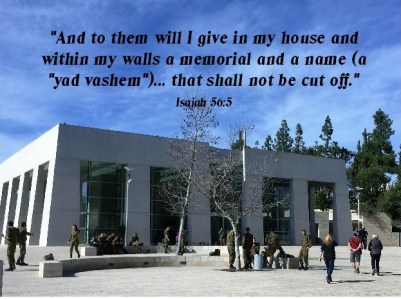
YadVasham2My intention was to share experiences from my trip to Israel pretty much in the order that they happened, but a few things and sleepless hours the other night thinking about Yad Vashem, the world holocaust center in Jerusalem, changed that for me—those few things were a television show my daughter and I watched, a child’s movie we watched with my granddaughter, and Lent, which started this past week.
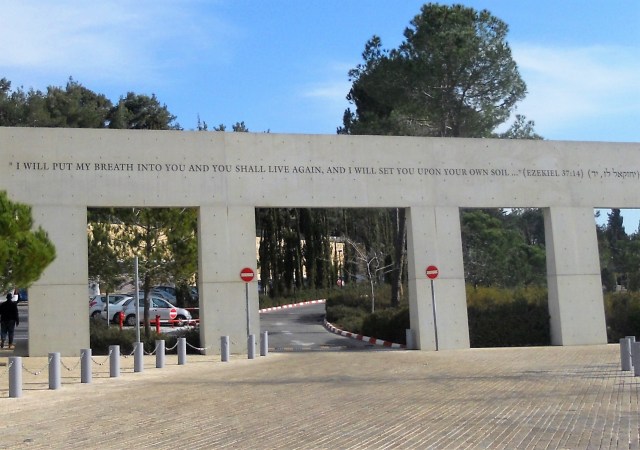
The episode of the television show (Foyle’s War) we were watching was set at the end of World War II and addressed the issues of the continuing fear and hatred of the Jewish people in England after the war, the return of many Jews to Palestine, and the conflicts they faced there.  The British army withdrew from Israel and the State of Israel was established on May 14, 1948.

The movie we watched with my granddaughter was a remake of the musical “Annie”.  We were hesitant to rent it, yet when we watched it with Eugenie, we were so glad we did—it was a lot of fun and was not at all what we expected.  …and that is where we so often have problems—our expectations, and our beliefs about ourselves and others.  Sadly, even after Auschwitz, Dachau, and Buchenwald (to name just a few of the concentration camps) were closed at the end of the war, the prejudice, fear, and hatred continued on in the minds and hearts of many people.

Writing about our visit to the holocaust center is not easy—and I am glad, because I don’t ever want talking or writing about such horrors to ever become easy or just a recounting of facts.  I confess that it was overwhelming to see the piles of shoes of victims, the personal belongings stolen from the Jewish people, the instruments for “measuring” physical characteristics in attempts to classify hatred and murder, the faces of victims—and the numerous other reminders from the past.  A pictorial and chronological accounting of the events, along with physical reminders of the atrocities of Nazi Germany weaved a pathway through time, reminding us that what happened in the past century did not happen overnight—it was a journey towards evil.  And if we don’t confront evil, if we suppress attitudes of hatred and prejudice in our hearts, our homes, and our societies, we will be doomed to repeat the wickedness of the past.


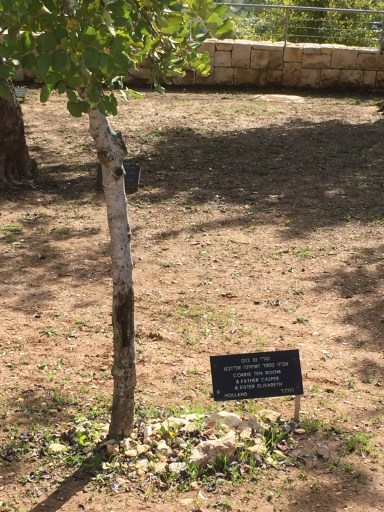
CorrieTenBoom.jpg

The Avenue of Trees is a moving tribute to “The Righteous Among the Nations”—non-Jewish rescuers of Jews during the holocaust.  It was both encouraging and a solemn experience to walk down the avenue reading the names by trees planted in the memory of those who were willing to risk their own lives to save Jewish lives—some familiar names like Oskar Schindler and Corrie Ten Boom stood out to me.  May we always have the courage that these people showed in standing with the persecuted, opposing evil!


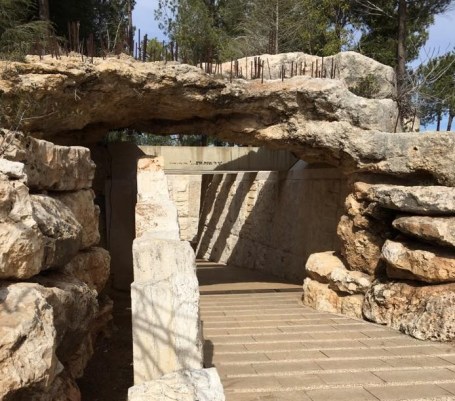
childrensmemorial

The children’s memorial, commemorating the lives of approximately 1.5 million children murdered during the holocaust is a soul-wrenching exhibit created in an underground cavern.  Exposed rebar sticking up over the entrance to the exhibit stands as a stark reminder of the generation of children that did not have the opportunity to build on the foundations of the past.  Throughout the memorial, candle light is reflected in darkness to represent millions of stars as the names of the children, their ages, and counties of origin are read—I don’t think I saw any dry eyes at the exit. 

And Lent.

I don’t really know much about Lent other than to consider it a religious, “Catholic” custom, not really something Protestants do.  But this year my daughter suggested giving up desserts for Lent. To be honest, our motives have a lot to do with losing weight and food management rather than for any sort of spiritual reasons—just another attempt to use what may be considered a spiritual discipline to accomplish a personal goal.  But I thought I would look up some information about Lent to try to understand its purpose.

Lent begins on Ash Wednesday and extends for the 40 days leading up to Easter—it is based on Jesus being led into the wilderness by the Holy Spirit, where he fasted and prayed for 40 days, while being tempted by Satan.  For Christians nowadays, it is an opportunity to refocus our attention by fasting, prayer, and cutting out some of the things in our lives that distract us from our relationship with God.

Lent is also a time for humbling ourselves in repentance, though we don’t readily recognize our need to do so.  This admonishment is written to Christians: “Therefore submit to God.  Resist the devil and he will flee from you.  Draw near to God and He will draw near to you.  Cleanse your hands, you sinners; and purify your hearts, you double-minded.  Lament and mourn and weep!  Let your laughter be turned to mourning and your joy to gloom.  Humble yourselves in the sight of the Lord, and He will lift you up” (James 4:7-10).

This is what a television show, a child’s movie, and Lent have to do with each other—they served as reminders that even though the appearance and actions of evil may be hidden or eliminated, unless hearts are changed through humility and repentance, unless we recognize and bring our attitudes of criticism, condemnation, and prejudice to the throne of God, we run the risk of repeating the past.  Let us be careful to listen to what our inner voices are saying, eager to respond to the Holy Spirit, and quick to acknowledge His conviction.


“When I shut up heaven and there is no rain, or command the locusts to devour the land, or send pestilence among My people, if My people who are called by My name will humble themselves, and pray and seek My face, and turn from their wicked ways, then I will hear from heaven, and will forgive their sin and heal their land.”


(2 Chronicles 7:13, 14)

Iwillput.JPG


Posted in Uncategorized | Tagged , , , , , , | 2 Comments

Journey to the Promised Land

I am home now—what an amazing opportunity to visit this historically critical land, to walk down the streets where Jesus walked and see the hillsides where he taught. 

To be honest, I am finding it quite difficult to write—how can I possibly capture on paper the dynamic historical records that the mountains and valleys, the rivers and seas, the wine and olive presses, the mosaics, and the ancient ruins hold?  How can I possibly write the message that the stones cry out?  The task is too big for me!  However, many of us have the record of life and death, of civilizations and cultures, of tyrants and slaves on the bookshelves of our homes—the Scriptures dictated by the Spirit of God and preserved through the ages by the hand of God.

Visiting the countries of Israel and Jordan added an amazing depth to what I have read in God’s Word—seeing the mountains of Moab, the wilderness of Zin, the valley where David fought Goliath, Nazareth, where Jesus grew up (to name just a few of the places where we stopped)—adding dimension and color to the black and white pages of my Bible.

We visited a church in Jerusalem (Narkis Street Congregation) and I know in one of my upcoming posts, I will share a bit about the message that was taught that day.  However, a comment someone made to me when we were there resonated in my heart.  I think I might have written in my last blog that my children paid for my trip, that there was no way that I could afford to make this journey.  This person I was talking to mentioned that they have seen it, time and again, where it was financially impossible for someone to come to Israel, yet God made a way—He has opened up the doors for many people to visit the Holy Land.

And one time, when we were visiting the shop of an Orthodox Jew in old Jerusalem, the shop owner made the comment, “People don’t choose to come to Israel, God calls them!”  I have to agree.

I’ve had to reevaluate the word “blessing” – I think that I have over-used it and under-appreciated the significance of being blessed by God.  On this journey, visiting Israel and Jordan, we were not specifically on a sight-seeing tour; rather, our group was immersed in scripture, climbing through the wilderness, in a boat on the sea of Galilee in (mildly) stormy weather, visiting ancient ruins, walking through the streets of old Jerusalem, seeing significant places from the life and ministry of Jesus, all the while experiencing in-depth teaching to enhance our understanding of long-ago civilizations—recognizing that some things don’t really change no matter how much time goes by—I can say with passion that this trip was a blessing beyond anything I have ever considered a blessing!

Here are some significant scriptural blessings:

“Now the Lord had said to Abram: ‘Get out of your country, from your family and from your father’s house, to a land that I will show you.  I will make you a great nation; I will bless you and make your name great; and you shall be a blessing.  I will bless those who bless you, and I will curse him who curses you; and in you all the families of the earth shall be blessed” (Genesis 12:1-3).

When God tested Abraham, telling him to sacrifice his son Isaac, Abraham obeyed, beginning the long journey to Mount Moriah, and keeping his eyes on God.  This was God’s response to Abraham’s obedience: “‘Do not lay your hand on the lad, or do anything to him; for now I know that you fear God, since you have not withheld your son, your only son, from Me.’…Then the Angel of the Lord called to Abraham a second time out of heaven, and said: ‘By Myself I have sworn, says the Lord, because you have done this thing, and have not withheld your son, your only son—blessing I will bless you, and multiplying I will multiply your descendants as the stars of the heaven and as the sand which is on the seashore; and your descendants shall possess the gate of their enemies.  In your seed all the nations of the earth shall be blessed, because you have obeyed My voice.’” (Genesis 22:12, 15-18).

In Abraham, all the families [peoples] of the earth are blessed; and in Abraham’s Seed all of the nations of the earth are blessed because of his obedience— “to Abraham and his Seed were the promises made.  He does not say, ‘And to seeds,’ as of many, but as of one, ‘And to your Seed,’ who is Christ” (Galatians 3:16). 

Although I am a Gentile, I am included in the blessings God made to Abraham through his Seed, Jesus Christ—because, by faith, I received Jesus as my Lord and Savior, He gave me the right to become a child of God.

I am so blessed!  


 “For I do not desire, brethren, that you should be ignorant of this mystery, lest you should be wise in your own opinion, that blindness in part has happened to Israel until the fullness of the Gentiles has come in.  And so all Israel will be saved, as it is written: ‘The Deliverer will come out of Zion, and He will turn away ungodliness from Jacob; For this is My covenant with them, when I take away their sins.’

“Concerning the gospel they are enemies for your sake, but concerning the election they are beloved for the sake of the fathers.  For the gifts and the calling of God are irrevocable….

“Oh, the depth of the riches both of the wisdom and knowledge of God!  How unsearchable are His judgments and His ways past finding out! …For of Him and through Him and to Him are all things, to whom be glory forever.  Amen.”

(Romans 11:25-29, 33, 36)

Posted in Uncategorized | Tagged , , , , , , , | 2 Comments

Beginnings

I am so excited!  I am leaving on a trip to Israel next week.  It is something that I have really wanted to do for a long time, but the logistics (finances, mostly) seemed to make it an impossible dream.  I recognize that many Christians long deeply to travel to the Promised Land; however, it just really seemed impossible for me.  As much as I would love to see the ancient sites and walk on the paths and through the cities where Jesus walked, I recognize that my faith is not dependent on making this trip. 

However, thanks to the generosity of my kids, that dream is going to come true!

I’ve been writing my prayer journals for some time now and decided awhile back that it was time to read and pray through the first five books of the Bible.  Genesis gives the background and sets the stage for all of history.  Accepting the biblical account of the dawn of time is critical for accepting the God-breathed authenticity of the rest scripture.  Recognizing the everlasting covenant God made with Abraham reminds me of a high mountain stream that begins as trickle, and a man of faith, that flowing through time, creates a power and a chosen lineage to bring forth a Savior.

So I look forward to my trip to the land where the promise began to unfold, to walk on the stage where the greatest drama in history played out, and to stand in the places where our God who became man stood.

But that drama had a beginning point many years before—and this is my prayer, based on the first chapter of Genesis:


Father God, you are sovereign and you are the Creator of all that exists.  I am in awe of your imagination which brought forth such beauty, intricacy, and every minute detail—seen and unseen—in your universe.  In you, O Lord, all things hold together, and it is in you, my God, that I choose to live.

Yet I am prone to wander, to feed my soul with what does not satisfy.  Forgive me, I pray.  Let your Holy Spirit hover over my life to guide me and indwell my spirit, to recreate in me the image and likeness of your son, Jesus Christ.

You created light and saw that it was good—You are light—the light of the world—and you are good, O God!  Separate the light from the darkness in my thoughts and my attitudes, I pray; strengthen and encourage me to live in the light of your presence, shunning the darkness of this world.

Lord, I believe the Bible is true; I accept these scriptures as your inerrant, infallible Word, spoken by the Holy Spirit to your chosen messengers “…for doctrine, for reproof, for correction, for instruction in righteousness, that the man of God may be complete, thoroughly equipped for every good work.” (2 Timothy 3:16, 17)

I believe in the literal seven-day creation because if I doubt the beginning of the story, there is little else in this book I can believe.  The greatest revelation of your character shown in these verses is that you are good, all that you do is good, and it is your design that good should multiply.

Father, what an honor you bestowed on mankind to be created in your image!  However, very little of that goodness exists in the world today; very little of the dominion and authority you granted at creation continues on earth—yet your Holy Spirit dwells in the hearts of all those who have received Jesus to be their Lord and Savior.  Wake up your church, O God!  Ignite passion in the hearts of your people to pursue you, to reflect your light and your image to this dark and dying world.

I pray these things in Jesus’ name, amen.

Covenantpromise

Posted in Uncategorized | Tagged , , , , , , , | 3 Comments

Not by Might…

I decided that it was time to begin at the beginning, reading and praying through the first five books of the Bible.  I confess that writing both my blog and my prayer journals have become quite a task for me—between my propensity for distraction and the overwhelming tyranny of chores and household responsibilities, I just seem to get nowhere close to writing or typing up all that I would like.  But the first hour or two in the morning are sacred, my time spent in God’s Word and communion with Him—I love it!

And then I get up.

And I am assaulted by the diversions and pressures of all the “gotta get done before I can do anything else” messages that snap like alligators at my feet.  The holidays especially dictate extra things to do, people to see, meals to prepare, kids to supervise, trips to take, as well as added chores around the house.

Romans 7 is my story—“For I know that in me (that is, in my flesh) nothing good dwells; for to will is present with me, but how to perform what is good I do not find” (v. 18).  And my song echoes the refrain from the old hymn (Come, Thou Fount of Every Blessing):  “Prone to wander, Lord, I feel it, prone to leave the God I love; here’s my heart, O take and seal it, seal it for thy courts above.”

For me, it is quite typical coming to the end of a year feeling this way—over-extended, over-eating, pretty much overwhelmed in many regards, and incredibly inadequate as far as my relationship with God is concerned—and wanting to make resolutions to do much better in the coming year.  I’ve been on this journey of life for a while now and have decided to forego adding fuel to the enemy’s fires of condemnation by making New Year’s resolutions; however, I also recognize a “clean slate” opportunity at the beginning of each new year that goes beyond the “new mercies” I hope for each morning.

Things change when we accept Jesus’ sacrifice on the cross as payment for our sins—it becomes so much more than a conscious decision, in fact, “if anyone is in Christ, he is a new creation; old things have passed away; behold, all things have become new” (2 Corinthians 5:17).  What was asleep, awakens; what was dead, comes alive—when we were “once foolish, disobedient, deceived, serving various lusts and pleasure, living in malice and envy, hateful and hating one another.…the kindness and the love of God our Savior toward man appeared, not by works of righteousness which we have done, but according to His mercy He saved us, through the washing of regeneration and renewing of the Holy Spirit, whom He poured out on us abundantly through Jesus Christ our Savior” (Titus 3:3-6).

As the initial glow of our salvation starts to dim, (speaking personally here) it is easy to slip into mirroring the expectations of what the Christian life looks like.  It becomes more about religious disciplines than an ever-growing relationship with the Creator.  Of course we need to read the Bible; of course prayer is essential for intimacy with God.  And of course we “should” give offerings, do good works, watch less television and spend less time on the internet…  But slowly, subtly, often unconsciously I slip into a spiritual condition best represented by the church at Galatia:  “O foolish Galatians!  Who has bewitched you that you should not obey the truth, before whose eyes Jesus Christ was clearly portrayed among you as crucified?  This only I want to learn from you:  Did you receive the Spirit by the works of the law, or by the hearing of faith?  Are you so foolish?  Having begun in the Spirit, are you now being made perfect by the flesh?” (Galatians 3:1-3).

The Holy Spirit spoke these words to the apostle Paul and he wrote them in a letter to the Ephesian church:  “But God, who is rich in mercy, because of His great love with which He loved us, even when we were dead in trespasses, made us alive together with Christ (by grace you have been saved), and raised us up together, and made us sit together in the heavenly places in Christ Jesus…For by grace you have been saved through faith, and that not of yourselves; it is the gift of God, not of works, lest anyone should boast.  For we are His workmanship, created in Christ Jesus for good works, which God prepared beforehand that we should walk in them” (Ephesians 2:4-6, 8-10).

It is so easy so easy as a Christian to take what is spiritual and attempt to turn it into something that is definable or measureable—grasping verses like “faith without works is dead” (James 2:26), emphasizing works and minimizing faith, substituting works for faith, and forgetting that “…it is God who works in you both to will and to do for His good pleasure” (Philippians 2:13).

Do you remember how you received Christ?  By faith.  “As you therefore have received Christ Jesus the Lord, so walk in Him, rooted and built up in Him and established in the faith, as you have been taught, abounding in it with thanksgiving” (Colossians 2:6, 7).

This is my cry, “O wretched [woman] that I am!  Who will deliver me from this body of death?  I thank God—through Jesus Christ our Lord!”  So—“There is therefore now no condemnation to those who are in Christ Jesus, who do not walk according to the flesh, but according to the Spirit.”  … And,[I am] not in the flesh but in the Spirit, if indeed the Spirit of God dwells in [me]” (Romans 7:24-25; 8:1, 9).  And the Spirit of God does dwell in me by faith!

This is my hope for the new year:  To draw closer to Jesus and experience Him drawing closer to me, to lean more heavily on the Holy Spirit’s work in my life and put less confidence in the “good” works of my flesh, to grow deeper in my knowledge of God’s Word so that I will be quicker to recognize the voice of the enemy as he whispers his lies into my thoughts, and to cherish moments of stillness so that I can hear the voice of God’s Spirit as He directs my paths.

My prayer is that we all will continue to grow in the grace and knowledge of God as this new year unfolds.


“‘Not by might nor by power,

But by My Spirit,’ says the Lord of hosts.”

Zechariah 4:6

Posted in Uncategorized | Tagged , , , , , , , | 2 Comments

What is a Christian to Do?

I started writing this a couple of weeks ago after the Paris attacks but then I got sick and my energy and motivation in writing took a serious hit.  Feeling better now, and stunned by the news of more terrorist activity in a community not that far from here, I decided it was time to sit down and write.

I’m not here to make a political statement, though what I believe can certainly have political overtones—for me the problems arising from violent acts, not necessarily terrorist related, and the acts perpetrated by terrorists are both moral and spiritual and cannot be contained by denial nor legislation.  Jesus warned, “And because lawlessness will abound, the love of many will grow cold” (Matthew 24:12).  While some may say that global warming is contributing to this world’s demise, scripture confirms that spiritual cooling is a sign of the earth’s final days.

Along with burgeoning violence all over the world, there is the Syrian refugee crisis, as well as dilemma caused by illegal immigration.  For many people, the answers are clear-cut and the media feeds many of those opinions.  But for Christians, there must only be one point of reference, one source of truth (not opinion) for how we acknowledge and respond to the fluid morality and evil, demonic activities rampant all around us—and it is the Bible, God’s inerrant Word, and source of counsel throughout the unfolding of history. 

As Christians, we are not limited to criticizing governments and condemning leaders because those behaviors solve nothing and they run contrary to scripture:   “Rejoice always, pray without ceasing, in everything give thanks; for this is the will of God in Christ Jesus for you.  Do not quench the Spirit.  Do not despise prophecies.  Test all things; hold fast what is good.  Abstain from every form of evil” (1 Thessalonians 5:16-22); and, “Rejoice in the Lord always.  Again I will say, rejoice!  Let your gentleness be known to all men.  The Lord is at hand.  Be anxious for nothing, but in everything by prayer and supplication, with thanksgiving, let your request be made known to God; and the peace of God, which surpasses all understanding, will guard your hearts and minds through Christ Jesus” (Philippians 4:4-7). 

Yet it is much easier to express an opinion than study scripture—are we despising prophecies when we don’t take the time to open God’s Word and study for ourselves what it teaches?  Are we exhibiting faithlessness when we are criticizing instead of rejoicing?  Do anger and fear color our conversations more deeply than gentleness and thanksgiving?  I have to ask myself these things because I find it so much easier to speak to others about the evil rampant throughout this nation and the world than approaching God in brokenness and supplication, praying for this nation and the world.

Do my words express faith or fear?  Does laziness or an eagerness to pursue what God has to say exemplify my willingness to pick up the Bible to study His Word?  Asking these questions is not about generating condemnation; rather, it is about understanding what motivates our lives.  The apostle Paul wrote to the Corinthian church, “Examine yourselves as to whether you are in the faith.  Test yourselves.  Do you not know yourselves, that Jesus Christ is in you?…” (2 Corinthians 13:5).

Do we need to repent for our faithless, ungodly, lazy attitudes towards our God and our Savior?  We have the assurance that God will forgive us when we do—and He will change us!  “If we confess our sins, He is faithful and just to forgive us our sins and to cleanse us from all unrighteousness.  If we say that we have not sinned, we make Him a liar, and His word is not in us” (1 John 1:9, 10).

We need to pray for those in government, those in authority over us, that God will give them wisdom and guide their decisions—and rejoice that He hears us!  “Therefore I exhort first of all that supplications, prayers, intercessions, and giving of thanks be made for all men, for kings and all who are in authority, that we may lead a quiet and peaceable life in all godliness and reverence.  For this is good and acceptable in the sight of God our Savior, who desires all men to be saved and to come to the knowledge of the truth” (1 Timothy 2:1-4).

Rather than letting fear and “what ifs?” cloud our thinking about the refugee crisis, let us pray that God will give our leaders wisdom on the national level, and willingness within churches and the hearts of individuals to pursue ministry opportunities for the broken and homeless.  Involvement in shattered lives is not optional for Christ’s followers; Jesus taught us concerning judgment, “Then the King will say to those on His right hand, ‘Come, you blessed of My Father, inherit the kingdom prepared for you from the foundation of the world: for I was hungry and you gave Me food, I was thirsty and you gave Me drink; I was a stranger and you took Me in; I was naked and you clothed Me; I was sick and you visited Me; I was in prison and you came to Me.’…And the King will answer and say to them, ‘Assuredly, I say to you, inasmuch as you did it to one of the least of these My brethren, you did it to Me.’” (Matthew 25:34-36, 40).  Although we do not like the word “religion”, the Holy Spirit instructs through James, “Pure and undefiled religion before God and the Father is this:  to visit orphans and widows in their trouble, and to keep oneself unspotted from the world” (James 1:27).

If you are unsure about how God wants you to be involved, ask Him!  Here also, are a few links of ministries actively involved in the Middle East:

Voice of the Martyrs

ATP (All Things Possible)

World Vision

Joshua Fund

Let us pray that we will shine as lights in this dark world!

Posted in Uncategorized | Tagged , , , , , , , , , , , , , | Leave a comment

Trust Issues

“Trust—the act of placing confidence in someone or something else—is a fundamental human experience, necessary for society to function and for any person to be relatively happy. Without it, fear rules. Trust is not an either/or proposition, but a matter of degree, and certain life experiences can impact a person’s ability to trust others.”  (Quoted from Goodtherapy.org)

Without “beating the [proverbial] dead horse,” I do not want to fly past the experience I had recently where I lost a lot of money to a skilled manipulator without learning all that God wants to teach me—because I really do not want to come up against another devilish attack, naïve about the enemy’s schemes.  For one without “3-D” glasses to recognize the spiritual realm, who may view the confrontations we have with unethical, cruel, or bitter people as just “unfortunate experiences” rather than spiritual warfare, scripture makes it very clear that “we do not wrestle against flesh and blood…” (Ephesians 6:12).  Unfortunately, we tend to underestimate just how cunning satan and his minions are—he does not go into battle unprepared and we must not either.

In the course of conversation, the person who was attempting to manipulate me into sending him money challenged me saying that I have “trust issues”.  This, of course, is a vulnerable area of my life—vulnerable for anyone who has experienced loss and betrayal.  So there was a little part of me that wanted to prove that I could be trusting, and I took the accusation on as a challenge, forgetting that one of the enemy’s most devious strategies is to accuse and condemn Christians (John 8:10, 11; Revelation 12:10).

Trust is an essential element in a Christian’s life, as long as it is well placed.  The psalmist proclaims, “As for God, His way is perfect; the word of the Lord is proven; He is a shield to all who trust in Him” (Psalm 18:30).  And Solomon instructs, “Trust in the Lord with all your heart, and lean not on your own understanding; in all your ways acknowledge Him, and He shall direct your paths” (Proverbs 3:5, 6).  And we have this confidence, “The Lord redeems the soul of His servants, and none of those who trust in Him shall be condemned” (Psalm 34:22).

However, as we can see from the beginning of recorded history, Satan also desires our trust:  “Now the serpent…said to the woman, ‘Has God indeed said, “You shall not eat of every tree of the garden”?’  And the woman said to the serpent ‘…of the tree which is in the midst of the garden, God has said, “You shall not eat it, nor shall you touch it, lest you die.’”  Then the serpent said to the woman, ‘You will not surely die.’”  (Genesis 3:1-4).

We always have the choice of deciding who we are going to trust—whether it will be our Creator, who “is not slack concerning His promise, as some count slackness, but is longsuffering toward us, not willing that any should perish but that all should come to repentance” (2 Peter 3:9), or our “adversary the devil [who] walks about like a roaring lion, seeking whom he may devour” (1 Peter 5:8).

Just as satan misrepresented his intentions, and himself, to Eve, he continues to transform “himself into an angel of light” (2 Corinthians 11:14) to craftily deceive the unsuspecting.

Something significant stood out in my encounter with the person who sought to defraud me; although he demanded my trust, he offered “information” as a sign that he was trusting me—and for his protection and the safety of others, I was not to tell anyone else.  What I realize now is that there must not be any “exceptions” to Biblical counsel:  “The way of a fool is right in his own eyes, But he who heeds counsel is wise” (Proverbs 12:15).  “Listen to counsel and receive instruction, that you may be wise in your latter days” (Proverbs 19:20); the counsel of a good friend is delightful—“Ointment and perfume delight the heart, and the sweetness of a man’s friend gives delight by hearty counsel” (Proverbs 27:9).  There can be no reason, no situation in our lives exempt from seeking biblical counsel from at least one Spirit-filled friend!

One of the enemy’s strategies is to isolate us from friends and fellowship with other believers.  A recorded event in Israel’s journey from Egypt made a lasting impression on me:  “Remember what Amalek did to you on the way you were coming out of Egypt, how he met you on the way and attacked your rear ranks, all the stragglers at your rear, when you were tired and weary; and he did not fear God” (Deuteronomy 25:17, 18).  Satan continues to attack with vengeance the stragglers, the isolated, the vulnerable—the tired and weary.

As easy as it is to listen to voices of fear, pride, intimidation, or manipulation, God did not create us for these; instead, He created us for support and community:  “…be filled with the Spirit, speaking to one another in psalms and hymns and spiritual songs, singing and making melody in your heart to the Lord, giving thanks always for all things to God the Father in the name of our Lord Jesus Christ, submitting to one another in the fear of God” (Ephesians 5:18-21).

“And let us consider one another in order to stir up love and good works, not forsaking the assembling of ourselves together, as is the manner of some, but exhorting one another, and so much the more as you see the Day approaching”

(Hebrews 10:24, 25).

Posted in Uncategorized | Tagged , , , , , , , , , | Leave a comment

Truly Blessed!

I’ve been working on another post about spiritual warfare lately, sort of struggling through it.  I am pretty sure that it will get posted on here one of these days; though right now there is something else I want to write about that I think is even more important than understanding our enemy—it is knowing and understanding our Friend!

Jesus taught His disciples, “This is My commandment, that you love one another as I have loved you.  Greater love has no one than this, than to lay down one’s life for his friends.  You are My friends if you do whatever I command you.  No longer do I call you servants, for a servant does not know what his master is doing; but I have called you friends, for all things that I heard from My Father I have made known to you” (John 15:12-15).

It is such an amazing blessing to be friends with Jesus! —I recognize that some wish to burden us with additional rules keying off Jesus’ words, “You are my friends if you do whatever I command you”, yet slipping blithely past “this is My commandment, that you love one another.”  Or, like the religious leaders at the time, some lay “aside the commandment of God” or redefine the commandment of God in order to promote the traditions of men.  (Mark 7:8, 9)  However, I love that there are no secrets between friends—all things that Jesus heard from His Father, He reveals to those who are His friends!

I think it is interesting that the apostle Paul related knowing Jesus with loss—“Yet indeed I also count all things loss for the excellence of the knowledge of Christ Jesus my Lord, for whom I have suffered the loss of all things, and count them as rubbish, that I may gain Christ and be found in Him, not having my own righteousness, which is from the law, but that which is through faith in Christ, the righteousness which is from God by faith…” (Philippians 3:8, 9). 

There are different kinds of loss, though; the kind of loss we willingly release to gain something better and the kind of loss where something, or someone, is taken away from us—against our will and often to our anguish or regret.  Almost everyone, and some people at a very early age, have experienced loss—it is just a symptom of our fallen planet.  However, those of us who know Jesus have a promise and the hope of an eternity without grief.

I remember once sitting in a small “prayer room”—a connecting passageway between a little Christian ministry and a bar located on Haight Street in San Francisco’s Haight-Ashbury district.  I was praying and reading the Psalms and I sensed that my praise was somewhat hollow and I felt that my “religion” was shallow.  My “faith” was untested; I hadn’t grasped the significance of Christ’s sacrifice on the cross for me because I was so caught up in the chains of legalism—and I couldn’t begin to comprehend the gifts of our Savior and the awesomeness of God.

I turned 65 this past week and many years have passed since the day I sat there on those pillows with my Bible open on my lap, reading the Psalmist’s words of praise.  As I considered a friend’s comment about my joy at the recent birth of a grandson—my response was to say that I am truly blessed!  And I am, no doubt about it.  However, I did not get to this place in my life without experiencing sorrow and loss.  My son and his wife did not get to that day when they held their son without traveling through valleys of grief and sadness.  However, we can say with confidence that the Lord is good and those who trust in Him are blessed (Psalm 34:8); that “the Lord is faithful, who [establishes us] and [guards us] from the evil one” (2 Thessalonians 3:3).

We do not treat suffering lightly, because we recognize that our Savior identifies with our anguish—He wept at Lazarus’ tomb, grieving with Mary and Martha yet knowing He would soon call His friend from the grave.  The apostle Paul refers to God and the Father of our Lord Jesus Christ as “the Father of mercies and God of all comfort, who comforts us in all our tribulation…” (2 Corinthians 1:3, 4).  He does not leave us or forsake us.  Ever.  

I do not mourn the loss I experienced through gaining a relationship with Jesus apart from the law.  Since that day when I sat on a pile of pillows in a dark passageway, my praise to God became solid through a personal relationship with Jesus Christ and the shallowness of my religion was replaced by new dimensions of faith in the complete work of my Savior on Calvary.  With Paul, I proclaim that the excellency of knowing Christ far exceeds all else; being found in Him with a righteousness from God through faith—not through the law lest I should boast.

So yes, I am truly blessed, and this is my confession:

“Praise the Lord!

Praise the Lord, O my soul!

While I live I will praise the Lord;

I will sing praises to my God while I have my being…

Happy is he who has the God of Jacob for his help,

Whose hope is in the Lord his God, who made heaven and earth,

The sea, and all that is in them;

Who keeps truth forever,

Who executes justice for the oppressed,

Who gives food to the hungry.

The Lord gives freedom to the prisoners.

The Lord opens the eyes of the blind;

The Lord raises those who are bowed down;

The Lord loves the righteous.

The Lord watches over the strangers;

He relieves the fatherless and widow;

But the way of the wicked He turns upside down.

The Lord shall reign forever—

Your God, O Zion, to all generations.

Praise the Lord!”


(Psalm 146:1-2, 5-10)


Posted in Uncategorized | Tagged , , , , , , , , | Leave a comment